Optimizing images is key to making WordPress websites load faster. Big images can really slow down a site. By making images smaller, websites can load quicker, making users happier and search engines rank them higher.
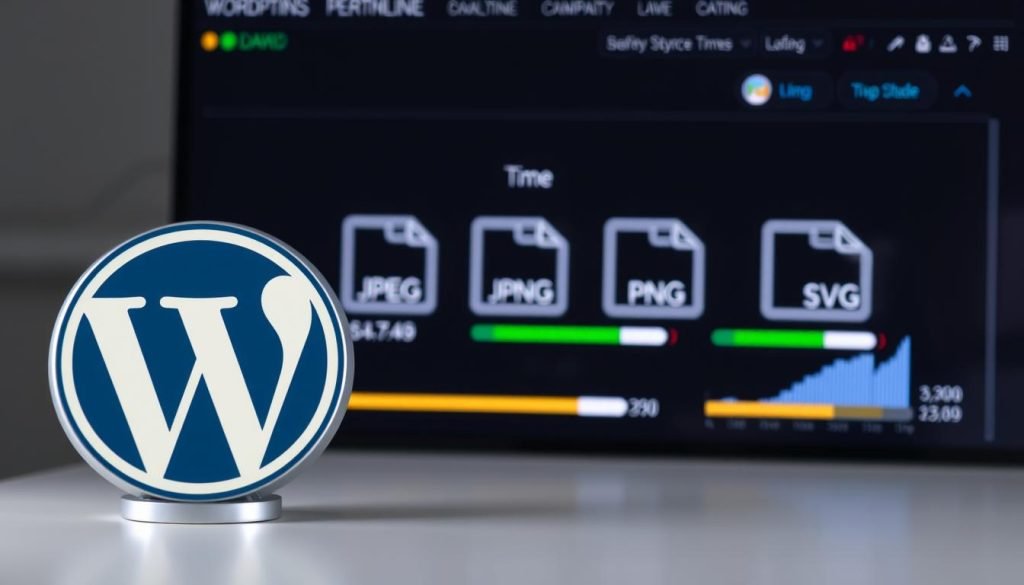
Improving WordPress performance with image optimization is crucial. It makes websites run smoother, load faster, and rank better in search engines. In this article, we’ll dive into why image optimization matters and how to do it right.
Introduction to Image Optimization
Image optimization means making images smaller without losing quality. You can do this by compressing images, lowering their resolution, or choosing the right format. Smaller images mean faster websites, which makes users and search engines happy.
Key Takeaways
- Optimizing images is essential for improving WordPress performance and page loading speed.
- Image optimization can enhance the overall user experience and improve search engine ranking.
- Reducing the file size of images can result in faster WordPress loading times.
- Using the right image format and compressing images can help optimize images.
- Improving WordPress performance through image optimization can have a significant impact on the website’s overall success.
Understanding Why Image Optimization Matters for WordPress
Optimizing images is key to making your WordPress site faster. Big, unoptimized images slow down your site. This hurts your site’s speed, user experience, and search rankings.
Optimized images help your site load faster. This makes your site more user-friendly. Search engines like Google also notice and rank your site better.
Optimized images make your site look better and load quicker. This keeps visitors interested. It also makes your site more attractive and professional.
Impact on Page Loading Speed
A slow site hurts your business. A one-second delay can drop conversions by 7%. Optimizing images makes your site faster, improving user experience and sales.
SEO Benefits of Optimized Images
Optimized images boost your site’s SEO. Good alt tags and file names help your images show up in searches. This brings more visitors to your site.
User Experience Considerations
Optimized images are crucial for a good user experience. They make your site fast and engaging. This leads to more visitors and better sales.
Common Image Problems Affecting WordPress Speed
WordPress site owners often face image problems that slow down their sites. Using the wrong image formats can make pages load slowly. This can scare off visitors and harm the site’s reputation.
Another big issue is not compressing images. This makes files too big and slows down websites. Also, not making images work well on all devices can cause problems, especially on mobiles. Fixing these image problems is key to a fast WordPress site.
Some common image problems that slow down WordPress include:
- Using the wrong image formats, such as BMP or TIFF
- Failing to compress images, resulting in large file sizes
- Not optimizing images for different devices, leading to slow loading times on mobile devices
By solving these image problems, WordPress site owners can make their sites faster. This leads to happier visitors, more sales, and better rankings in search engines. It boosts the site’s WordPress speed and trustworthiness.
Essential Image Optimization Techniques for WordPress
Optimizing images is key to making a WordPress site run better. Choosing the right image formats is a big part of this. Formats like JPEG, PNG, and WebP each have their own benefits and drawbacks. Picking the right one can make your images smaller without losing quality.
Getting the image sizing right is also important. Serving images that are too big can use up a lot of bandwidth and slow down your site. By using the correct size, you can make your site load faster. Plus, using compression methods and tools can make your images even smaller.
There are different compression methods out there. Lossy compression makes images smaller by removing some data, while lossless keeps all the data but still makes images smaller. You can find many tools to help with image compression, like plugins and software.
- Choose the right image format for your website
- Use proper image sizing to reduce file size
- Use compression methods and tools to reduce file size
Best Practices for Image Names and Alt Text
Optimizing images for SEO is key, and image names and alt text are crucial. They help search engines understand your images. This can boost your site’s visibility in image searches. Use descriptive and keyword-rich names and alt text to improve your site’s SEO and user experience.
Here are some tips for creating effective image names and alt text:
- Use descriptive file names that include target keywords
- Keep alt text concise and accurate, describing the content of the image
- Use a consistent naming convention throughout your website
By following these best practices, you can enhance your website’s SEO.
Remember, SEO is not just about text. Optimizing images also boosts your website’s visibility and user experience. Descriptive image names and alt text can elevate your SEO efforts and increase website traffic.
How to Optimize Images for Faster WordPress Performance
Optimizing images is key to making your WordPress site faster. By making your images smaller, your site loads quicker. You can do this by resizing and compressing images before uploading.
WordPress has tools to help with image optimization. You can use the built-in image editor to make images smaller. There are also many plugins that can automate this process, making it easier to manage your images.
Using third-party software offers many benefits. It can automatically compress, resize, and cache your images. It also optimizes images for different devices, ensuring your site loads fast no matter how users access it. By combining manual steps with WordPress tools and third-party software, you can greatly improve your site’s performance.
Here are some steps to optimize your images:
- Use image compression tools to reduce file size
- Resize images to the correct dimensions
- Use caching to reduce the number of requests to your server
By following these steps and using the right tools, you can make your images load faster. This improves your site’s performance and user experience.
Top Image Optimization Plugins for WordPress
Optimizing images on your WordPress site is crucial. Image optimization plugins can greatly help. They reduce image sizes, making your site load faster and feel smoother. Here are some top WordPress plugins for this task:
Here are some of the top image optimization plugins for WordPress:
- ShortPixel
- Imagify
- TinyPNG
- Optimole
These plugins offer features like automatic compression and resizing. They also convert images to WebP format. Using these image optimization plugins can boost your site’s performance and user experience.
But, optimizing images isn’t just about plugins. Image format and size also play a big role. By using the right WordPress plugins and following best practices, you can see big improvements in your site’s speed and performance.
Advanced Techniques for Image Delivery
Optimizing images is key to a better website. Advanced methods can make it even better. Lazy loading loads images only when they’re seen, cutting down page load times. It’s great for sites with lots of high-quality images.
Content delivery networks (CDN) speed up image delivery too. They serve images from servers near visitors, making them load faster. Also, browser caching stores images on users’ devices. This means they don’t have to download them again and again.
- Implementing lazy loading to reduce initial load times
- Using a content delivery network (CDN) to serve images from closer locations
- Setting up browser caching to store frequently-used resources locally
Using these techniques can make websites load much faster. This makes for a better user experience. With lazy loading, content delivery networks, and browser caching, images load quickly. This leads to more engagement and higher conversion rates.
Mobile-First Image Optimization Strategies
Most web traffic now comes from mobile devices. So, it’s key to focus on mobile-first image optimization. This means making images fit smaller screens first. It makes websites load faster and gives users a better experience.
Using responsive images is a big part of this. It makes sure images fit all screen sizes well. This boosts both performance and user happiness. Responsive images also help your site rank better in search engines.
To make images even better for mobile, use mobile compression. This makes images smaller, so they load quicker. Combining responsive images with mobile compression makes your site run smoother on mobile. This leads to happier users and better search rankings.
Key Considerations for Mobile-First Image Optimization
- Use responsive images to ensure proper sizing for different screen sizes and devices
- Implement mobile-specific compression techniques to reduce image file sizes
- Test and optimize images for different mobile devices and screen sizes
By following these tips, you can make your website better for mobile users. This means more people will enjoy your site and search engines will rank it higher.
Measuring Image Optimization Success
To see if your image optimization is working, you need to watch a few important performance metrics. These are page loading speed, bounce rate, and conversion rate. By keeping an eye on these, you can find what needs more work and tweak your images.
Google PageSpeed Insights, GTmetrix, and Pingdom are great tools for this. They give you detailed reports on how fast your site loads. These reports show if your optimization plans are paying off and where you should tweak things.

- Page loading speed: Aim for a loading time of under 3 seconds.
- Bounce rate: Strive for a bounce rate of under 30%.
- Conversion rate: Aim for a conversion rate of over 2%.
By tracking these metrics and using the right tools, you can achieve image optimization success. This will make your website run better overall.
Troubleshooting Common Image Optimization Issues
When it comes to image optimization, troubleshooting is key. It helps keep your website fast and user-friendly. Even with the best efforts, image optimization issues can still pop up. To find and fix these problems, using performance testing tools is vital.
Common issues include wrong image formats, not enough compression, and problems with lazy loading or CDN setups. To tackle these, a clear plan for troubleshooting is needed. This means spotting the problem, using performance testing tools, and fixing it.
Here are steps to tackle common image optimization issues:
- Check image formats and compression levels
- Verify lazy loading and CDN setups
- Use performance testing tools to diagnose issues
- Implement fixes to resolve issues and improve website performance
By following these steps and using the right performance testing tools, you can solve common image optimization issues. This ensures your website runs smoothly.
Future-Proof Image Optimization Methods
The web is always changing, and we need to keep up with image optimization methods. We must know about new image formats, compression, and delivery tech. Using future-proof strategies keeps your site fast and efficient, ready for new tech.
Important image optimization methods include new formats like AVIF and JPEG XL. They improve compression and quality. Also, using new compression and delivery tech, like CDNs and browser caching, optimizes images more.
Here’s how to future-proof your image optimization:
- Keep up with the latest image formats and compression algorithms
- Use new delivery tech, like CDNs and browser caching
- Use tools and plugins to make optimization easier
By using these future-proof methods, your website stays fast, efficient, and looks great. This is true even as the web keeps changing.
Conclusion
Optimizing images on WordPress is key to fast website performance. By using the strategies from this guide, site owners can make their images work better. This leads to better user experiences, higher SEO rankings, and more business success.
Choosing the right image formats and sizes is important. Using lazy loading and CDNs can also help. These tools and practices help WordPress users optimize their images well.
Keeping up with image optimization is crucial for WordPress site owners. By following this guide, you can make your site fast and engaging. This will help your site stay competitive and grow online.
FAQ
What is the importance of image optimization for WordPress?
Image optimization is key for faster WordPress sites. Big, unoptimized images slow down your site. Optimized images make your site load quicker, rank better in search engines, and offer a better user experience.
What are some common image problems that can affect WordPress speed?
Common issues include using the wrong image formats and not compressing images. Not optimizing for different devices also causes problems. These issues make your site slow, which can scare off visitors and harm your site’s reputation.
What are the essential image optimization techniques for WordPress?
Key techniques include picking the right image format and following size guidelines. Using compression tools to shrink file sizes without losing quality is also crucial.
How can image names and alt text improve WordPress SEO?
Using descriptive and keyword-rich file names and alt text helps search engines understand your images. This can boost your site’s visibility in image searches and improve SEO.
What are some top image optimization plugins for WordPress?
Top plugins include tools for automatic image compression, format conversion, and serving images from a CDN. These tools greatly enhance your site’s performance.
What advanced techniques can further enhance image delivery in WordPress?
Advanced techniques include lazy loading, using a CDN, and browser caching. These methods can make image delivery faster and improve your site’s performance.
How can I measure the success of my image optimization efforts in WordPress?
Success can be measured by looking at page speed, bounce rate, and conversion rate. Tools like Google PageSpeed Insights, GTmetrix, and Pingdom offer detailed performance reports.
How can I troubleshoot common image optimization issues in WordPress?
Start by identifying the problem and using performance testing tools to diagnose and fix it. A systematic approach is key to solving image optimization issues.
How can I future-proof my image optimization methods for WordPress?
To stay ahead, keep up with new image formats and compression technologies. This ensures your optimization methods remain effective and efficient.

Zeeshan is a seasoned web developer with over 8+ years of experience, specializing in WordPress, Themosis, and Laravel. customized web solutions. Through his website, zeeshanwebexpert.com, Zeeshan offers professional web services, ensuring long-term solutions for clients.